The Minimum-Effort Grocery List That Actually Keeps You Eating Well
Meal planning advice usually assumes energy and time that a genuinely low-effort week doesn’t have. The better solution isn’t a meticulous meal plan, it’s a repeatable grocery list boring enough to buy on autopilot every week without a single new decision required.

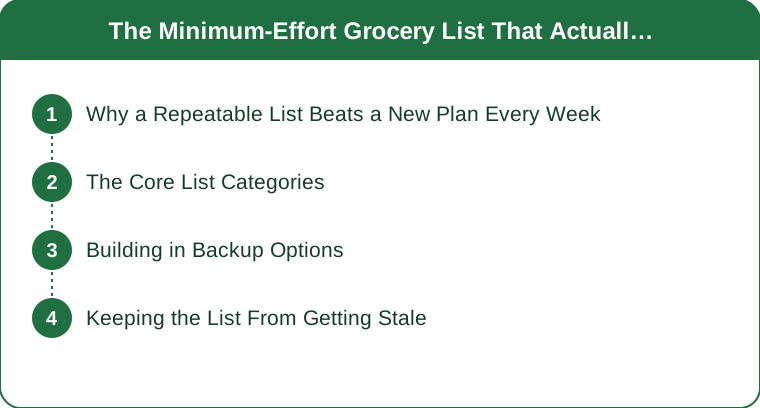
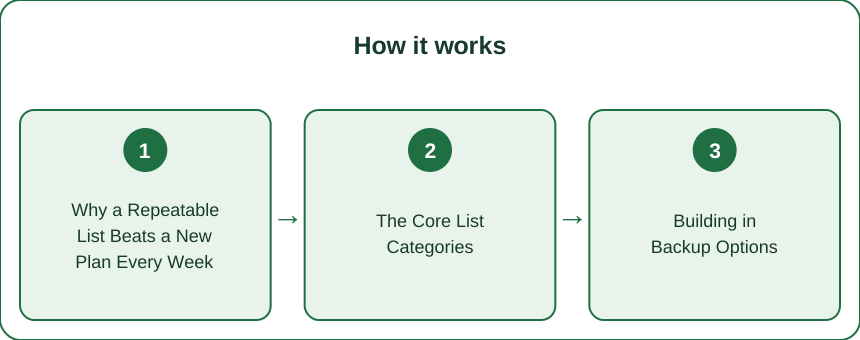
Why a Repeatable List Beats a New Plan Every Week
The logic: the the-decision-fatigue-reduction (a fixed, repeating grocery list removing the weekly decision of what to buy, which is often the actual barrier rather than the cooking itself), the the-boring-on-purpose-design (deliberately choosing a slightly boring, repetitive list over a varied one, since variety requires more planning energy than a low-effort week can spare), the the-familiar-cooking-speed (repeated ingredients meaning familiar, fast preparation methods rather than needing to look up a new recipe each time).
The Core List Categories
The structure: the the-one-protein-two-ways (choosing one or two reliable proteins that can be prepared multiple simple ways, like rotisserie chicken or eggs, rather than planning a different protein each night), the the-frozen-vegetable-default (frozen vegetables as the default rather than fresh, since they don’t spoil on a low-energy week when cooking gets delayed a few days), the the-one-carb-base (a single reliable carb base like rice or a simple pasta that pairs with almost anything else on the list, reducing the need to match specific combinations).

Building in Backup Options
The safety net: the the-shelf-stable-backup-meal (at least one fully shelf-stable backup meal, like canned soup or a frozen meal, kept on hand for the lowest-energy days when even the simple list feels like too much), the the-snack-buffer (a stock of simple, ready-to-eat snacks reducing the temptation to skip eating entirely or order delivery on a low-motivation day), the the-pre-washed-produce-choice (pre-washed and pre-cut produce, even at a higher price, being worth it on a genuinely low-effort week since it removes a preparation step entirely).
Keeping the List From Getting Stale
The maintenance approach: the the-monthly-not-weekly-review (reviewing and adjusting the list monthly rather than weekly, since frequent changes reintroduce the decision fatigue the list is meant to eliminate), the the-one-swap-at-a-time (swapping in one new item at a time rather than overhauling the whole list, to keep the low-effort structure intact while still avoiding total boredom), and the frame (a genuinely low-effort grocery list works by removing weekly decisions entirely — a repeating, slightly boring list with built-in backups keeps eating on track without needing willpower or planning energy.)
The real barrier on a low-energy week usually isn’t cooking itself, it’s the decision-making that happens before cooking even starts: what to buy, what to make, how it all fits together. A repeatable grocery list solves that by removing the decision entirely, trading variety for a boring, dependable rotation of one or two reliable proteins, frozen vegetables that don’t spoil when cooking gets delayed, and a single carb base that pairs with almost everything else on the list. Building in a genuine backup — a shelf-stable meal and some ready-to-eat snacks — covers the lowest-energy days when even the simple list feels like too much effort. The list only needs revisiting monthly, swapping in one new item at a time rather than a full overhaul, since frequent changes just reintroduce the same decision fatigue the whole system is built to avoid. This isn’t a meal plan, it’s a way to keep eating reasonably well without needing willpower most weeks don’t have to spare.
Keep Reading
This article is for general informational and styling purposes only. Fit, sizing, and product availability may vary.