Why Exercising During Your Shows Actually Sticks When Workout Plans Don't
Quick Answer: TV workouts stick because they attach movement to something that already happens every day - no scheduling, no motivation, no deciding. Habit research is blunt about this: behaviors anchored to existing routines survive, while behaviors that need their own time slot quietly die within weeks. An hour of streaming holds three or four natural movement windows, and even the laziest version - stretching through one episode - beats the ambitious plan you quit in February. The trick is preparing the floor space once and picking moves that do not require watching your hands.
The workout plan wants you at 6am. The couch wants you at 8pm. One of these appointments you have kept every night for years - so build on the one with the perfect attendance record.
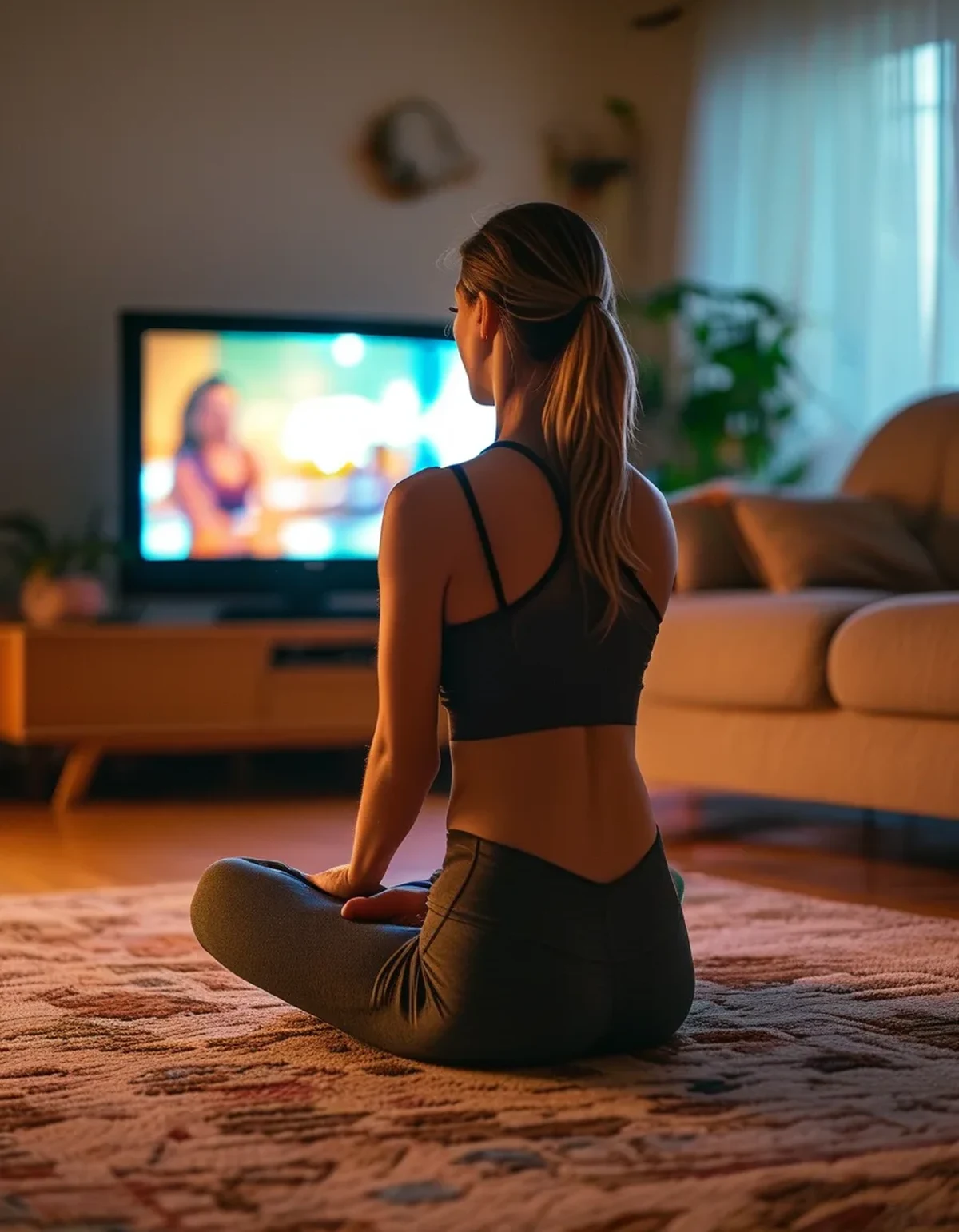
Why does the TV slot work when scheduled workouts fail?
The couch hour has structural advantages no gym schedule can match.
It already exists. The hardest part of any exercise habit is not the exercise - it is defending a time slot against everything else in your life. The evening show needs no defending; it has survived every busy season you have ever had.
Attachment beats willpower. Habit stacking - anchoring a new behavior to an established one - consistently outperforms standalone resolutions, because the old habit does the remembering for you. The show starting is the cue; no alarm, no app, no negotiation.
The distraction is the feature. Exercise feels effortful partly because you are attending to the effort. Plot attends to it for you. Reps done during dialogue register as barely half the tedium of reps done in silence - the same reason gym cardio machines all face screens.
Zero transition cost. No drive, no changing rooms, no packing a bag. Transition friction kills more workout habits than laziness ever did, and the living room floor has none.
The bar can be honestly low. A TV workout does not pretend to replace training for a marathon. It replaces sitting completely still for three hours - and against that baseline, twenty minutes of stretching and a set of squats per episode is an enormous upgrade, repeated nightly.
And it compounds quietly. Three episodes a week with light movement is roughly 150 extra active minutes a month from time you were already spending. Nothing about that requires becoming a different person, which is exactly why it lasts.
What should you actually do during an episode?
The menu matters: moves must survive divided attention. Anything requiring coordination, counting, or watching your hands dies by minute ten.
Tier one - the floor is enough. Sitting on the floor instead of the couch is the gateway move. Floor sitting keeps hips and ankles mobile and makes every other move available because you are already down there. Add a cushion, lean against the couch, done.
Tier two - the stretch episode. Hold-based stretching is the perfect TV companion because holds want time, and episodes provide it. Figure-four, hamstring straddle, pigeon, chest-opener over a cushion - rotate through 60-to-90-second holds and an episode covers the whole body without one decision.
Tier three - the commercial-break set. Streaming killed ads, so use scene changes or every-ten-minutes as the trigger: one set of squats, wall push-ups, glute bridges, or calf raises. Four triggers an episode, two episodes a night, and you have done eight sets while allegedly doing nothing.
Tier four - the background burner. For shows you half-watch: step in place, use a walking pad, ride a quiet bike, or do slow controlled step-ups on a low stool. Rhythm-based movement pairs with plot far better than rep-based movement.
Dress for the couch-to-floor life. This system runs on never needing to change clothes. Living in soft high-waisted leggings and a comfortable bra-top evening uniform means the floor stretch happens the moment you sit down - while jeans quietly veto it every time. Buttery-soft leggings that work for both lounging and lunging are legitimately part of the method, not a shopping excuse.
And keep one no-thought default. On truly dead evenings, the rule shrinks to: sit on the floor for one episode. That is the whole assignment, and it keeps the chain alive.
What Nobody Tells You About Couch-Adjacent Fitness
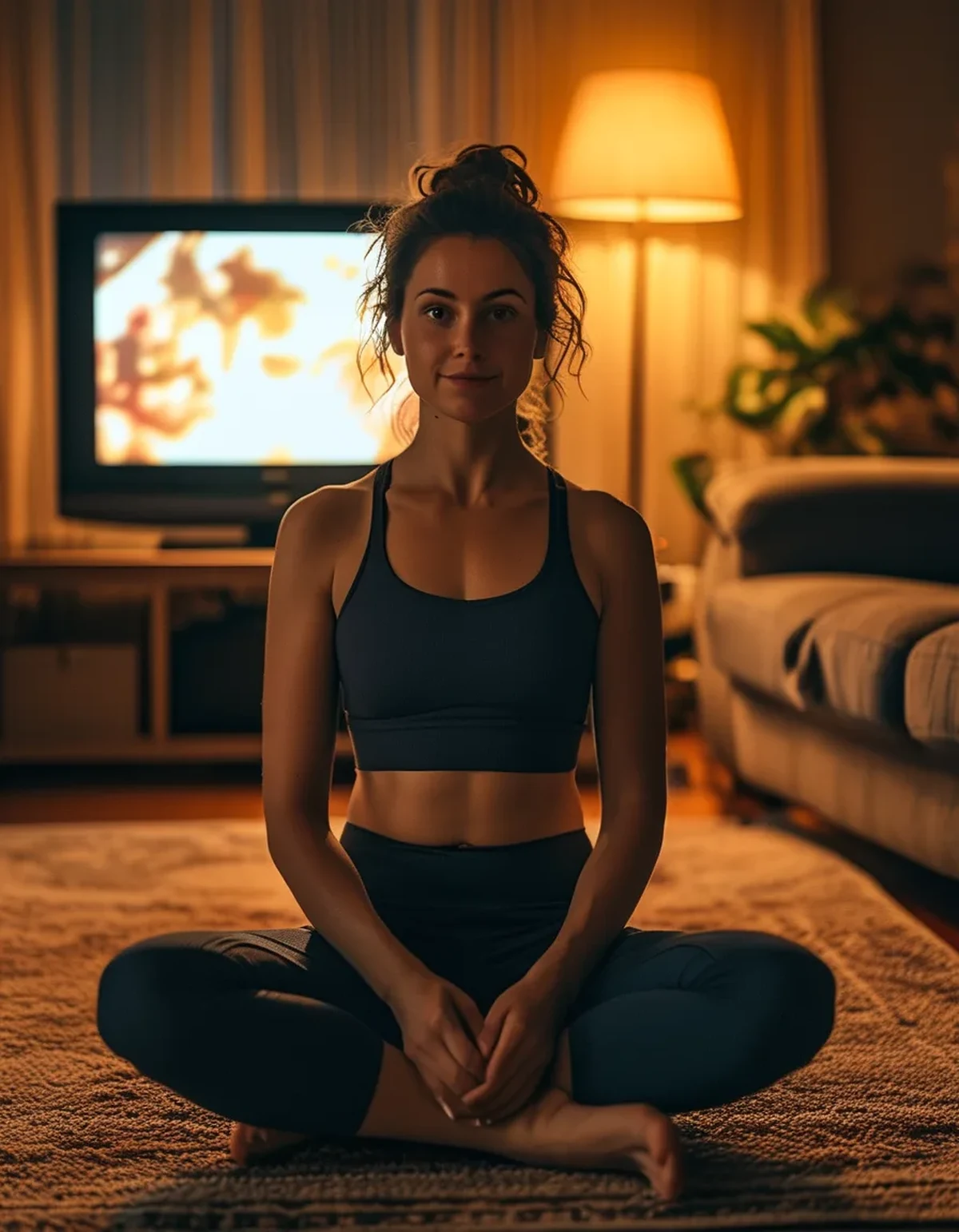
The floor itself is doing work. Getting down to the floor and back up repeatedly is a genuine mobility practice - sit-to-floor ability is one of the more telling fitness markers for aging well, and TV floor-sitting rehearses it nightly without ceremony.
Consistency beats intensity by a landslide at this level. Twenty easy minutes, five nights a week, outperforms one heroic weekly session for mobility, habit-strength, and how your body feels - and the easy version is the one that survives a bad week.
The couch potato baseline is the real enemy. Three motionless hours of evening streaming is one of the largest sedentary blocks in modern life. You do not need to transform it into training; you need to puncture it every ten minutes, and the health difference between punctured and unpunctured sitting is meaningful.
Your show choice changes your output. Tense thrillers produce fidgety, short-move energy; comfort rewatches suit long holds; reality shows with predictable rhythms make perfect interval timers. This sounds like a joke and is completely real.
Nobody has to know. Part of why this sticks is that it carries no identity weight. You are not becoming a fitness person; you are just someone who stretches during television. Habits with no self-image stakes have nothing to rebel against.
The one real risk is the fade-out. Week one is enthusiastic, week four is couch-only again. The countermeasures are physical, not motivational: leave the mat visible, keep the corner clear, and let the floor setup - not your memory - be the reminder.
How do you set it up so it runs itself?
One evening of preparation, then the system needs almost nothing from you.
Clear one couch-adjacent rectangle. A mat-sized space that stays permanently clear, close enough to see the screen at floor level. If you have to move a coffee table nightly, the habit is already losing - shift the layout once instead.
Stage the equipment in a basket. A mat or thick rug, one cushion, a resistance band, maybe light dumbbells. The basket lives beside the couch, visible. Visibility is the entire reminder system; a band you can see gets used, a band in a drawer does not exist.
Bind specific moves to specific shows. The drama is stretch night, the reality show is squats-at-every-elimination, the rewatch is walking-pad night. Specific beats general: move during TV fades, but this show means this move survives.
Change into the uniform at arrival, not decision time. Coming home and immediately putting on the soft leggings and tank removes the last barrier hours before you need it gone. If you are dressed for the floor, the floor happens.
Anchor the start, not the amount. The commitment is touch the floor when the episode starts - never a rep count. Amounts invite negotiation; starts do not. Most nights, starting produces twenty minutes on its own.
Let rest nights exist inside the system. Some episodes you just watch - from the floor, with one hip stretch. That still counts, the chain holds, and tomorrow needs no fresh start.
Review monthly by feel, not metrics. Easier floor sit, looser hips on stairs, less evening stiffness - those are the wins this system is built for, and they show up faster than expected.
FAQ: TV Workout Questions, Answered
Do TV workouts actually do anything?
Against the real alternative - three motionless hours - absolutely. Regular stretching, mobility work, and light strength sets during episodes add up to hours of monthly movement, and breaking up long sitting blocks has health value independent of the exercise itself.
What is the best exercise to do while watching TV?
Moves that survive divided attention: long-hold stretches, glute bridges, squats, wall push-ups, calf raises, and rhythm-based options like a walking pad. Skip anything requiring counting, coordination, or watching your hands.
How do I remember to move instead of just watching?
Make the environment remember for you: a permanently clear mat spot, a visible equipment basket, soft clothes on from the moment you get home, and a rule that binds the show starting to touching the floor. Cues beat willpower every night.
Is stretching during TV as good as a real stretching session?
For most people it is better in practice, because it happens. Episode-length sessions give stretches the long holds they want, and five casual nights beat the one focused session that keeps getting skipped.
How much can I realistically get from this?
Expect noticeably looser hips and hamstrings within a few weeks, easier floor sitting, and a few hundred extra active minutes a month. It will not train you for a 10K - it will steadily reverse what the couch was doing.
TL;DR:
- Attach movement to the show you already watch - anchored habits survive where scheduled workouts die.
- Sit on the floor, stretch through episodes, and use scene changes as set triggers.
- Pick moves that survive divided attention; save coordination for daylight.
- Stage a visible mat corner and live in clothes that let the floor happen instantly.
- Commit to starts, not amounts - touching the floor when the episode starts is the whole rule.
The couch hour has a perfect attendance record. Borrow it, and the laziest workout you own becomes the only one you never skip.
See It in Motion
Seen here: Super High Waist Embossed Yoga Leggings with Inner Pocket — shop it on bubblelime.com
Keep Reading
This article is for general informational and styling purposes only. Fit, sizing, and product availability may vary.